How the AI actually helps
You do the noticing. It does the typing.
You already know what you saw — that was never the problem. The problem was turning it into words before the energy ran out: a creek crossing at 2 pm is still in your head at 6 pm, but by then it's dinner, or a meeting, or your own kids. Grove's AI does exactly one thing about that. It types up what you noticed, for you to approve.
in the moment
it invents nothing
or discards it entirelyThe only publish button
written faster
The AI is the notebook, not the narrator. It captures the details that would otherwise slip away — what those details mean, and whether a family ever sees them, is always a person's call.
Step by step
The journey of one moment.
1. A teacher notices something
One photo, twenty seconds of voice at the creek: “Sami kept rebuilding the dam, tested every rock before placing it.” Hands free again in half a minute.
2. The AI writes a draft
Her words become two readable sentences, with suggested skills. It works only from what she captured — it never invents details it didn't hear or see.
3. The teacher decides
At lunch she fixes a word, removes a tag she disagrees with, and approves — or discards it entirely. Nothing reaches a family without her sign-off. No exceptions.
4. The family reads the story
Sami's parents see it before pickup. What they read is the teacher's account, written faster — never a machine's opinion of their child.
From play to proof
How a muddy morning becomes skills evidence.
Educators have always known that dam-building is engineering and rope swings are risk assessment. The hard part was writing it down. Grove keeps a map of how outdoor activities connect to skills, and to each province's early-learning expectations.
When the AI suggests a skill, it's proposing a match from that map, based on what the teacher described. The teacher confirms or removes it. Over a term, those confirmed moments add up to real evidence of growth. Never a score, never a ranking, never a comparison to other children. And if a story has no entry yet, that's not a gap that gets flagged — it just means that chapter hasn't been written.
One real example
What she captured
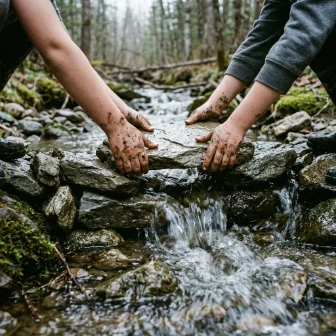
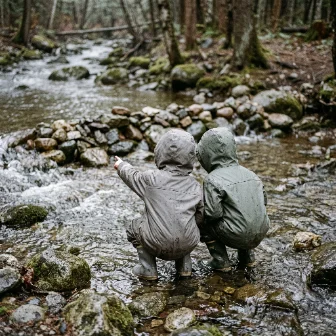
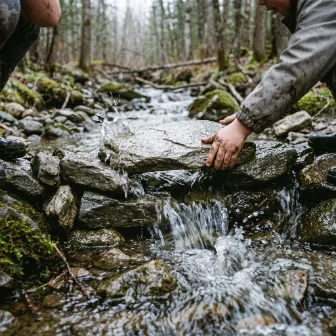
Two photos, a 12-second video, and a 20-second voice note — thirty seconds in the field, all told.
What the teacher said
“Sami kept rebuilding the dam, tested every rock before placing it, and got Theo to hold the big one.”
Skills the AI suggested · teacher confirmed
The teacher removed one suggestion she disagreed with.
Where it shows up
On Sami's feed the same day, in the monthly digest, and in the term record, where it counts toward the plain-language curriculum summary his parents receive.
The lines we don't cross
Five promises about your child's data.
These aren't settings that can be toggled later. They're how Grove is built, and breaking them would mean rebuilding the product.
Photos never leave your school's system
No photo of a child is ever sent to an outside AI company. All of the AI's work happens inside the same protected space where your school's data already lives.
Nothing trains on your children
Your school's photos, voice notes, and observations are never used to teach AI models. Not ours, not anyone's. Your child's childhood is not training data.
A teacher reads every word first
Every draft observation, digest, and record narrative is reviewed, edited, and approved by a teacher before a family sees it. The AI has no publish button.
The AI never judges your child
It suggests skills a moment might show. It never grades, ranks, profiles, or predicts anything about a child, and Grove has no scores anywhere in the product.
Everything stays in Canada, and expires
Data lives on Canadian servers, each school on its own isolated database. Routine content is designed to expire on a schedule, and families can export their child's portfolio any time.
Responsible use & governance
Rules for the tool, in writing.
A drafting assistant working near children needs more than good intentions. Grove's AI runs under a written use policy that every school and family can read, question, and hold us to.
A person is accountable for every word
Every published observation carries the name of the teacher who approved it. The AI is never the author of record, and there is no output it can publish on its own.
Every draft leaves a trail
What the AI drafted, what the teacher changed, and who approved it are all kept in an audit log. A school can review the full history of any observation, any time.
Consent is per child, per use
Families decide what the AI may touch. An opt-out is honoured at the moment of capture, automatically — it never depends on a teacher remembering.
Tested before it reaches a classroom
Changes to how the AI writes are reviewed and tested for accuracy and bias before release. New behaviour is never experimented on live classrooms.
A policy you can hold us to
Grove's AI-use policy is part of every school agreement: what the tool does, what it will never do, and how to report a concern. When the policy changes, schools are told first — in plain language.
Fair questions
What parents and educators ask us.
“Is an AI watching my child?”
No. There are no cameras, no monitoring, no analysis running in the background. The AI only ever works on the specific photo or voice note a teacher chose to capture, at the moment the teacher asks it to.
“What if the AI gets something wrong?”
Then the teacher fixes it before anyone sees it. That review step isn't optional or skippable, even on a busy day. A wrong draft costs the teacher ten seconds. It never reaches you.
“Does it work the same on iPhone and Android?”
Not yet. On-device drafting runs on Android today; on iPhone, Grove currently drafts from a structured template while the on-device version is completed. The part that matters — a teacher reviewing and approving every word — is identical on both.
“Will this replace my child's teacher's voice?”
The opposite is the goal. The draft starts from the teacher's own words and the teacher shapes every line. And the most personal piece, the note in the term record, is never AI-written at all.
“Can I opt my child out?”
Yes. Consent in Grove is per child and per use. If you opt out of photos, teachers see it at the moment of capture and Grove keeps your child out of shared content automatically.
“Who can I actually talk to about this?”
A person. Grove is built by a small Canadian team led by a Forest School parent. Write to hello@getgrove.ca and you'll get an answer from someone who can change how the product works.

Still have a question we didn't answer?
Ask us directly, or see how the rest of Grove works for your side of the school gate.